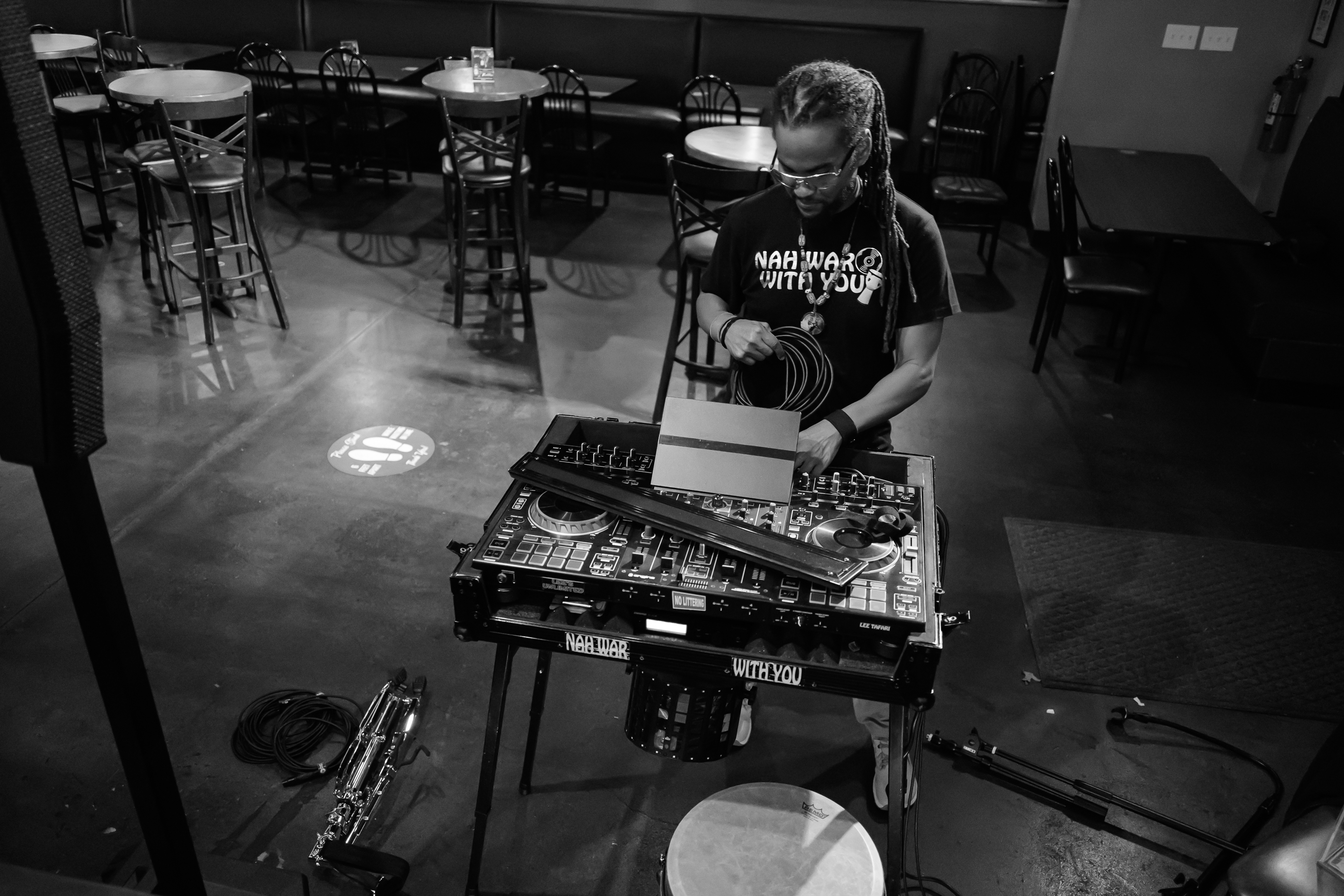

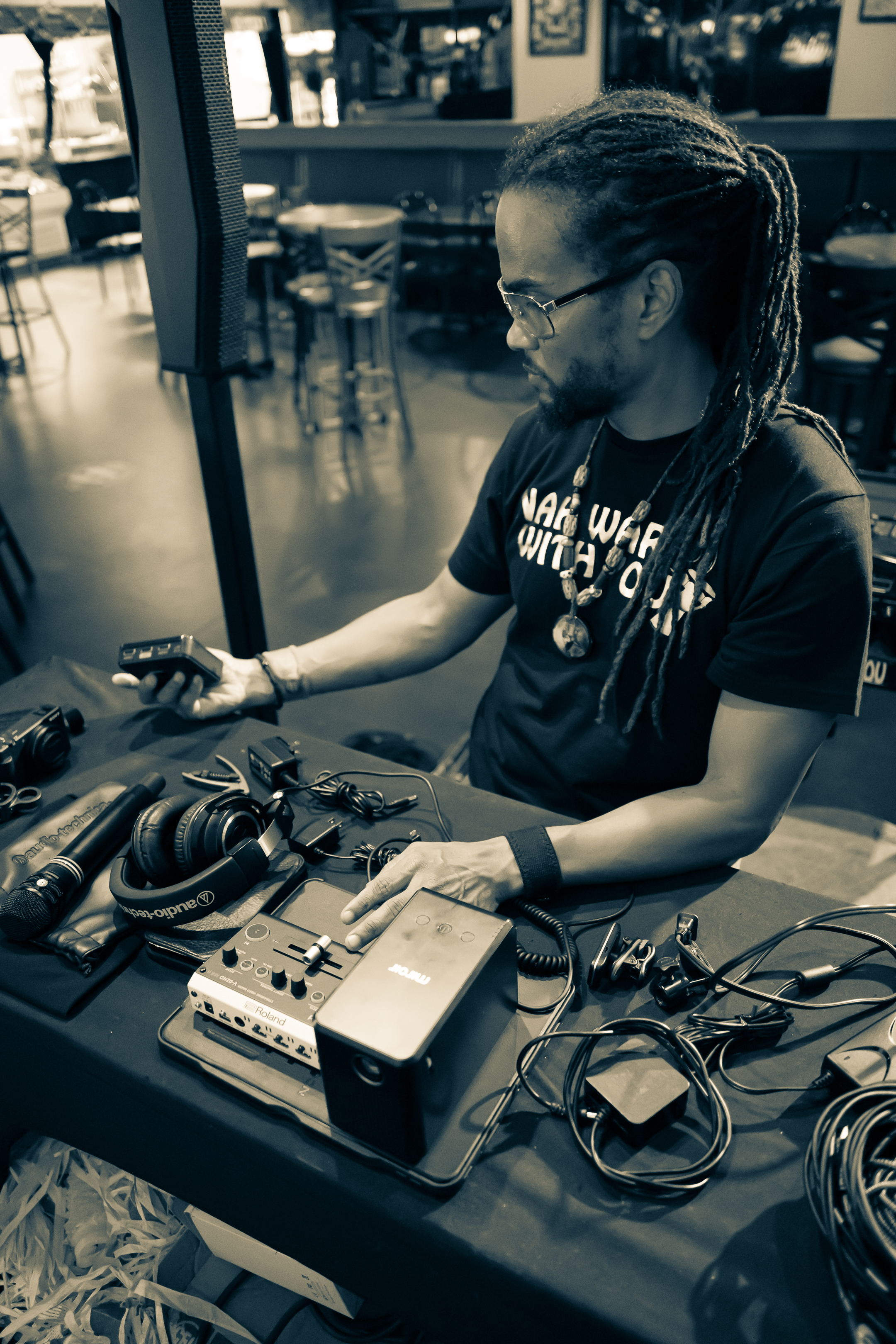
Exodus is not about rushing into the show. It is about command. The Performa enters by tightening the room first, lowering the ceiling with pressure, silence, and expectation until the crowd can feel the next move before they hear it.
This chapter is built from restraint. Drums arrive in fragments. Bass behaves like weather. Visuals stay disciplined: silhouettes, smoke, and sharp lines that make the performer feel larger than the stage footprint. The objective is not to give everything away. The objective is to make the room lean forward.
For The Performa, Exodus is the identity chapter. It tells the audience this is not background music, not generic nightlife, and not a playlist with better speakers. It is a staged arrival with intention, where every transition says the same thing: the experience is now under new direction.
When Exodus lands correctly, the audience changes posture. Phones come up. Conversations get shorter. The room stops treating the night as passive entertainment and starts responding to it like a live event.